Translate This Page
 | Stem Cells are undifferentiated cells that are characteristically of the same family type (lineage). They retain the ability to divide throughout life and give rise to cells that can become highly specialized and take the place of cells that die or are lost [1]. In other words stem cells can renew themselves through cell division, and can be induced to become tissue or organs [2] |
Adult Stem Cells: Adult stem cells are undifferentiated cells found throughout the body that divide themselves to replenish dying cells and to regenerate tissues. Adult stem cells can be isolated from a tissue sample obtained from an adult, meaning that they are not as controversial as embryonic stem cells because they do not require the destruction of an embryo. [4] | 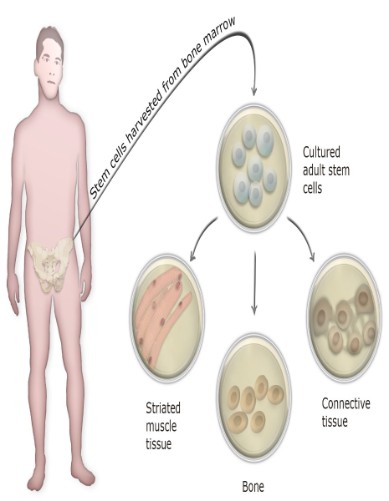 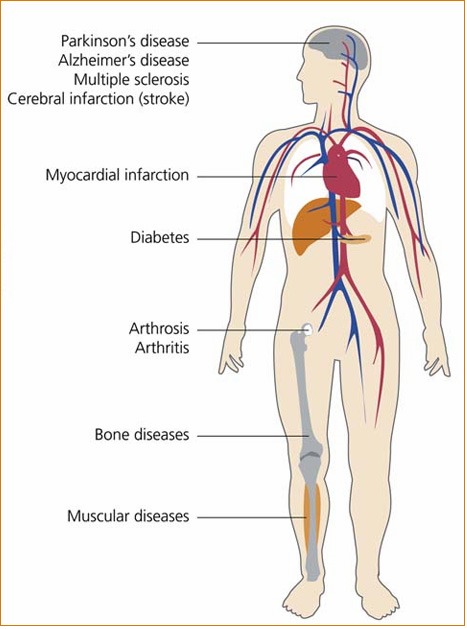 |
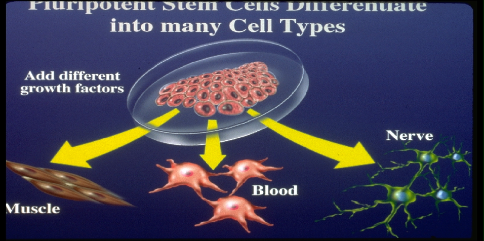 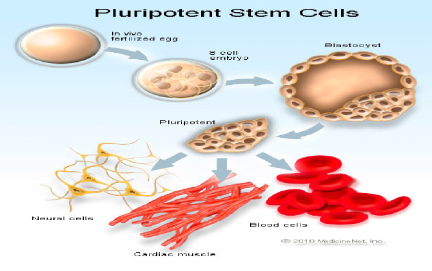 | Pluripotent Stem Cells: Pluripotent stem cells are cells that have the potential to mature into any cell in the body. They can only be isolated from fetal or embryonic tissue and can be grown in culture, but only with certain methods, to keep them from differentiating [5] |
One major difference between adult and embryonic stem cells is their different abilities in the number and type of differentiated cell types they can become. Embryonic stem cells can become all cell types of the body because they are pluripotent. Adult stem cells are thought to be limited to differentiating into different cell types of their tissue of origin. Embryonic stem cells can be grown relatively easily in culture. Adult stem cells are rare in mature tissues, so isolating these cells from an adult tissue is challenging, and methods to expand their numbers in cell culture have not yet been worked out. This is an important distinction, as large numbers of cells are needed for stem cell replacement therapies [3]. | 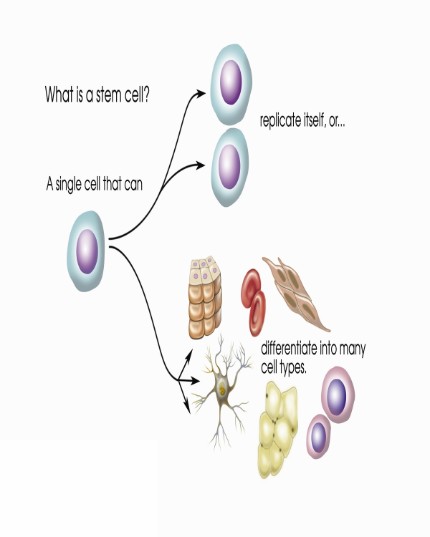 |
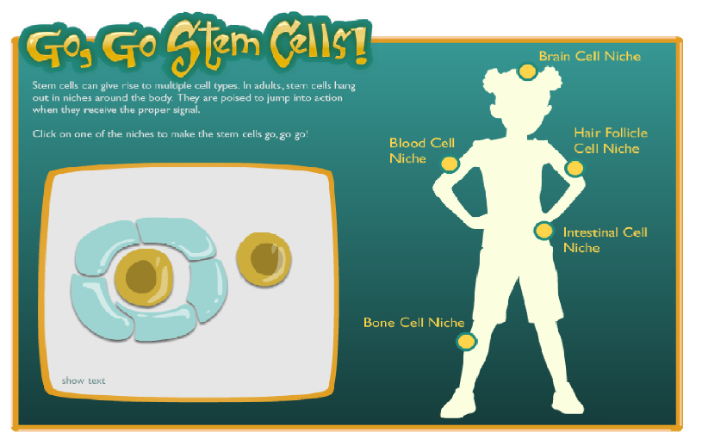
Click the images below to go to activities that will help you learn more about stem cells.
If you are still unsure, watch the videos below, in the sequence provided. These videos wil educate you about the very basics of biology and cells in general, which will hopefully help in understanding stem cells.
